
At the beginning, DisplayPort was developed for LCD monitors and adopted the "Micro-Packet Architecture" transmission architecture. Video content is transmitted in packets. This is obviously different from DVI, HDMI and other video transmission technologies. In other words, the emergence of HDMI replaces analog signal video, and the emergence of DisplayPort replaces DVI and VGA interfaces.
HDMI also supports uncompressed 8-channel digital audio transmission (sampling rate 192kHz, data length 24bits/sample), and any compressed audio stream such as Dolby Digital or DTS, as well as the 8-channel 1bit DSD signal used by SACD. In the HDMI 1.3 specification, support for ultra-high data volume uncompressed audio streams such as Dolby TrueHD and DTS-HD has been added.
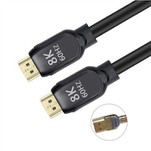
The standard Type A HDMI connector has 19 pins, and another Type B connector that supports higher resolution is defined, but no manufacturer uses the Type B connector. The Type B connector has 29 pins, allowing it to send an extended video channel to meet future high-quality requirements, such as WQSXGA (3200x2048).