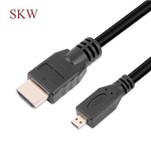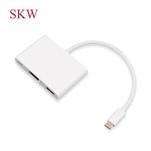

HDMI is designed to replace older analog signal video and audio transmission interfaces such as SCART or RCA terminals. It supports various TV and computer video formats, including SDTV, HDTV video images, plus multi-channel digital audio. Both HDMI and UDI without audio transmission function inherit DVI's core technology "Transmission Minimized Differential Signal" TMDS, which is still an extension of DVI in essence.
The video content of DVI, HDMI, UDI is transmitted in real-time and dedicated line mode, which can ensure that there will be no blockage when the video traffic is large. The amount of data per pixel is 24 bits. The signal timing is very similar to VGA.
The picture is sent line by line, and a specific blank time (similar to an analog scan line) is added after each line and each frame picture is sent, and the data is not "Micro-Packet Architecture". It will not only update the changed part of the two frames before and after. Each picture will be completely resent when it is updated. When the specification was first formulated, its maximum pixel transfer rate was 165Mpx/sec, which was enough to support 1080p quality at 60 frames per second, or UXGA resolution (1600x1200); later it was expanded to 340Mpx/sec in the HDMI 1.3 specification to match future possibilities Demand.